.avif)


In schools and districts of every shape and size, school counselors are stretched thin. And, we tend to think that smaller schools have better ratios, but they also have fewer counselors who sometimes end up with even more disparate responsibilities. On the other end of the spectrum are large schools where counselors can have 100s of students on their caseload. It’s unfortunate because school counseling and school counselors are critical to student academic success and mental wellbeing.
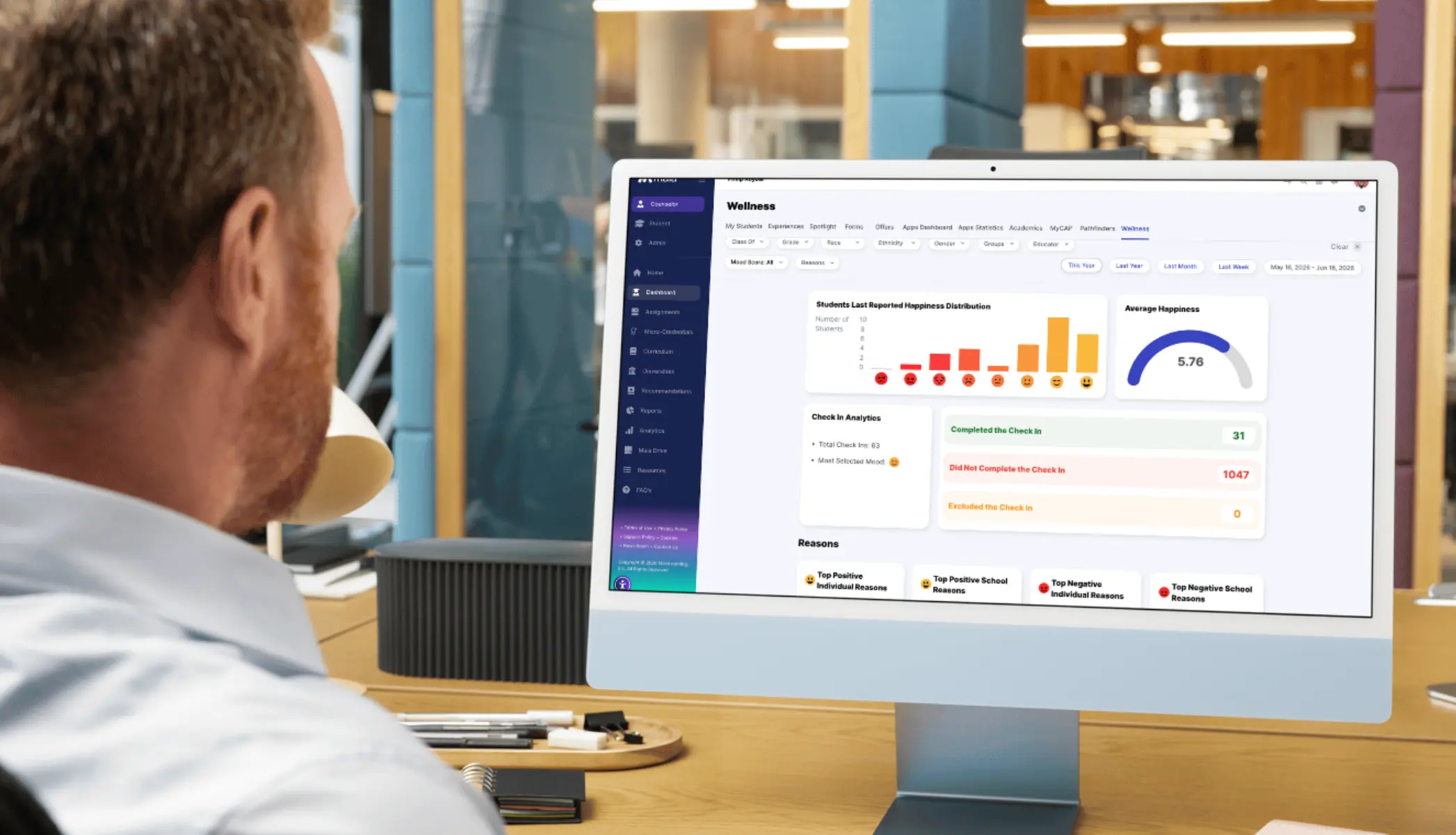
Whether it’s because of administrative-type duties or large assignments of students, counselors often struggle to provide the individualized support and attention that they would like to. It also means that they don’t always know when or with whom to intervene with support. This is why data dashboards are essential; they help counselors with information that they can act on, and, in many cases, proactively before things escalate. In this blog, we outline three important ways that counselors can use data to monitor students without necessarily having to meet with each of them.
Wellness Check-Ins
Having a regular student wellness check-in built into their routine can be a difference-maker for both students and counselors. Consistent check-ins allow counselors to see trends at the individual student level, with small groups, and the student body as a whole. When a check-in tool is applied frequently, counselors can see when individual students deviate from their baseline–giving them the data needed to prompt a face-to-face conversation based shifts and dips in self-assessments. Not every student needs a one-on-one check-in every day, which typically isn’t possible anyway, but when the data shows a spike or a drop, counselors can intervene proactively before things get worse. This works the same for groups as well when we know that a small group of students tend to ebb-and-flow together. Using this data, we might prevent an altercation or find out about something happening in the community whereby support is needed. Having a system for frequent wellness check-ins and monitoring the data accordingly gives counselors an advantage over those who don’t.
Lesson Completion
Counselors often have lessons or curriculum that they want to implement with students. Sometimes these lessons are based on state mandates; other times, they’re driven by a school or district initiative. Either way, the counselors who track the completion of the lessons–social and emotional learning lessons, for example–are not always the people on staff who administer them. This can actually put counselors in a tough spot. They might end up supervising the implementation of lessons that need to be completed by classroom teachers who they don’t actually supervise. But, having a data dashboard that indicates which students and groups who have completed the lessons provides objective information that can be used as a basis for a discussion with a teacher or team and can be used by administrators for accountability and fidelity with the programming. This ensures that whatever the curriculum is that’s supposed to be delivered to the student is actually getting to them on time.
Assignment Tracking
In some cases, there are assignments that counselors need students to complete that aren’t associated with a lesson. They’re tasks that counselors assign, such as completing the FAFSA or updating their resume. Again, some of these tasks are state mandates that all students must complete in certain grade levels; other times, they’re normal procedures to follow for applying to college. In any event, counselors are working to track completion even though they don’t have regular face-time with the students for whom they need to monitor progress. Data dashboards allow counselors to see who has completed the work by a certain due date and who hasn’t, which tells them who they need to message with a prompt to get back on track. These tools also provide ways to report completion of assignments for large groups of students without having to manage cumbersome spreadsheets.
Conclusion
Of course, the gold standard is always going to be that we meet with students 1:1 as much as possible and whenever feasible. It’s just not the reality in many schools, though. That’s why access to a data dashboard is fundamental to school counseling. Whether it’s following up on changes to mental health or creating a sequence of lessons and assignments to prepare students for their postsecondary goals, data dashboards provide counselors with what they need to be successful without all of the paperwork that would otherwise be necessary.
If you want to see a data dashboard that does everything discussed in this blog and more, schedule your demo today.